
How to Make Money on Upwork in Kenya (2026): A Beginner’s Guide
 TIMEBUCKS
Low minimum
payout of just
$3 — start
earning today!
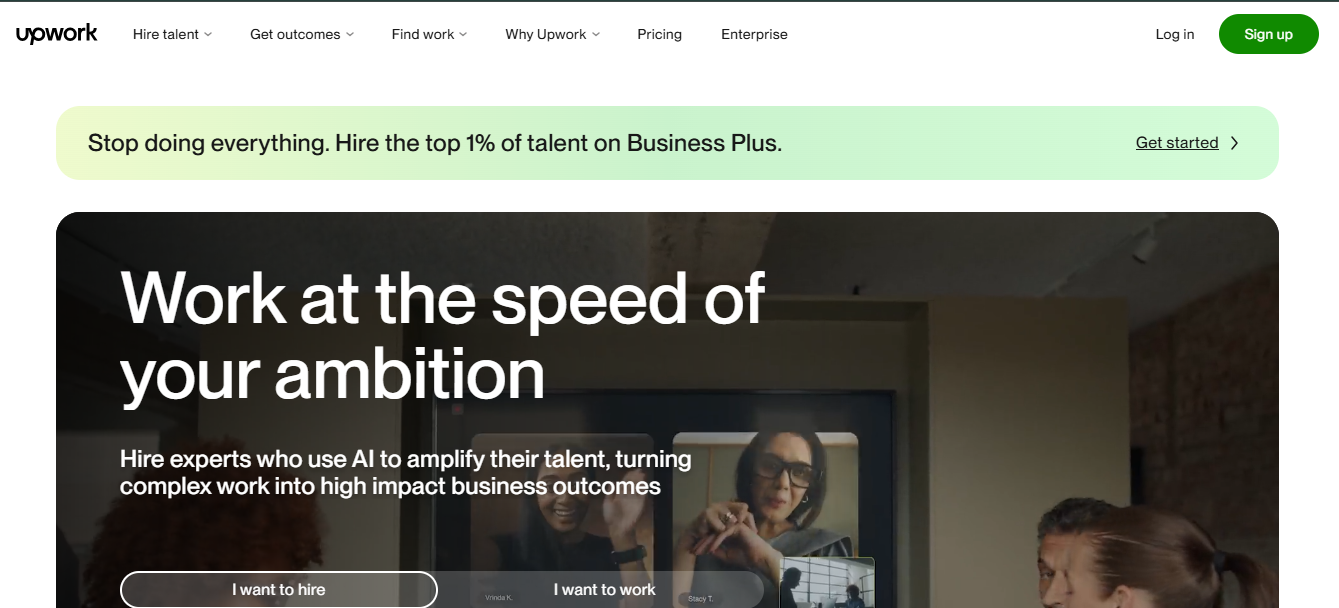
Upwork is open to Kenyan freelancers, and it’s one of the most reliable ways to earn in US dollars from clients worldwide — but it doesn’t work like a job board where you apply once and wait. It’s a competitive marketplace where new freelancers need to build a profile, spend “Connects” to submit proposals, and earn their first few reviews before consistent income becomes realistic.
The good news for Kenyans specifically: Upwork supports M-Pesa as a direct withdrawal method, which makes getting your earnings out noticeably simpler than on many other freelance platforms.
This guide covers exactly how the platform works for a Kenyan freelancer starting from zero — signing up, understanding Connects and fees, getting your first contract, and withdrawing what you earn.
Is Upwork Actually Available to Kenyans?
Yes. Kenya is a fully supported country on Upwork, both for freelancers and clients. You can create a profile, apply for jobs, get verified, and withdraw earnings without restriction. Kenyan freelancers are active across most categories on the platform, particularly writing, virtual assistance, customer support, graphic design, and increasingly software development and data-related work.
How Upwork Actually Works
Upwork runs on a bidding system rather than direct hiring. Clients post jobs; freelancers submit proposals using “Connects” (a limited currency you spend per application); the client reviews proposals and interviews or hires directly from there. Once hired, you complete the work under an hourly or fixed-price contract, get paid through Upwork’s payment protection system, and build reviews that make future proposals more competitive.
Connects: what they are and how many you need
Connects are what you spend to apply for jobs. As of 2026:
- A free Basic account gets a small monthly allotment of Connects (commonly around 10), and you can buy more at $0.15 each.
- Most job proposals require somewhere between 4 and 24 Connects, depending on the job’s budget and scope — Upwork shows you the exact cost before you apply.
- You can earn extra Connects by completing profile/verification steps, earning talent badges (Rising Talent, Top Rated, Top Rated Plus), or subscribing to Freelancer Plus (a paid monthly membership that includes a larger monthly Connects allotment and some added visibility features).
- Purchased Connects don’t roll over indefinitely — unused ones typically expire after a period, so it’s worth using them rather than stockpiling.
As a beginner, Connects are a real cost of doing business on Upwork. Applying carelessly to every job burns through them quickly with little return — being selective about which jobs you apply to matters more than applying to as many as possible.
Fees: what Upwork takes from your earnings
Upwork’s freelancer fee structure changed in 2025 from a flat tiered system to a variable service fee, generally cited in the 0%–15% range per contract, shown to you before you accept a job. Reports on exactly how this plays out vary — some sources describe it as effectively landing around 10% for most freelancers and most contracts, though the specific rate can depend on factors like skill demand and your history with a client. Because this figure isn’t fully standardised across sources, check the fee shown on your specific contract offer rather than assuming a fixed percentage — it’s displayed clearly before you accept.
Clients also pay their own separate fees, which don’t come out of your earnings directly but can influence how clients structure and price jobs.
How to Get Started: Step by Step
- Create your profile with a real photo and a specific, focused title — “SEO Content Writer for SaaS Companies” performs far better than a vague “Freelancer” or “I do everything” title.
- Complete identity verification. Upwork verifies your identity (ID upload and phone verification), which adds a visible trust badge to your profile and is generally quick to complete.
- Write a client-focused overview, not a resume. Explain what problems you solve for clients, not just what software you know.
- Add a portfolio, even with a few strong samples — for writing, design, or development work, this matters more than almost anything else in your profile for winning your first jobs.
- Set a competitive but not rock-bottom starting rate. Extremely low rates can actually make you look inexperienced or desperate to serious clients; price at the lower end of what’s reasonable for your skill level, not the absolute floor.
- Apply selectively, using your Connects on jobs that genuinely match your skills and that have signals of a serious client (a filled-out job description, a reasonable budget, past hiring history).
- Write a specific, tailored proposal for each job — referencing the client’s actual project rather than sending a generic template dramatically improves response rates.
- Follow through reliably on your first few contracts. Early reviews matter disproportionately, since they’re what future clients see when deciding whether to take a chance on you.
What Kind of Work Do Kenyans Typically Find on Upwork?
- Writing and content — articles, copywriting, SEO content, technical writing
- Virtual assistance and admin support — email management, scheduling, research, data entry
- Customer support — chat and email support for international companies
- Graphic design — logos, social media graphics, marketing materials
- Web and software development — increasingly in demand, and typically among the higher-paying categories once you have a portfolio
- Data-related work — data entry, data annotation, and increasingly work related to AI training and evaluation
Competition varies significantly by category — entry-level writing and admin roles are heavily contested, while specialised technical skills tend to have less competition relative to demand.
Realistic Earnings on Upwork for Kenyan Freelancers
There’s no fixed number, and it depends heavily on your skill, niche, and how consistently you apply and deliver. As a general, non-guaranteed picture:
- New freelancers with no reviews yet often start at lower hourly rates or smaller fixed-price gigs while building a track record — this initial period is usually the hardest and can take weeks to a few months.
- Freelancers with several completed contracts and good reviews typically see both higher win rates on proposals and the ability to raise their rates.
- Established Kenyan freelancers in in-demand categories (development, specialised writing, design) can earn a meaningful full-time income once they have a steady base of repeat and referred clients.
Be cautious of any claim promising a specific guaranteed income from Upwork — actual earnings depend on your own effort, skill, and how the market responds, not on the platform itself.
Read also: How to Make KSh 5,000 a Day Online in Kenya: A Realistic 2026 Breakdown
Withdrawing Your Earnings: What Actually Works for Kenyans
This is one area where Upwork is genuinely more convenient for Kenyans than many other platforms, because it offers direct M-Pesa withdrawal as an official payment method — not just through a third-party workaround.
- M-Pesa (Kenya only): Upwork supports withdrawing directly to M-Pesa. You’ll need to register the withdrawal method in your account settings, and your first and last name must exactly match both your M-Pesa registration and your verified name on Upwork, or the transfer can be delayed. New withdrawal methods typically take a few days to become active for security reasons. M-Pesa sets a withdrawal limit of up to KSh 70,000 per transaction.
- Direct to Local Bank: Kenya is a supported country for this option, with a small flat transfer fee per withdrawal. This routes funds straight into a Kenyan bank account in KES.
- Payoneer: Widely used by Kenyan freelancers as an alternative — funds land in your Payoneer balance and can then be withdrawn to a linked Kenyan bank account.
- PayPal: Also supported, though Kenya only has personal PayPal accounts, and withdrawal to M-Pesa or a bank typically requires an extra step (commonly through Equity Bank’s PayPal-to-M-Pesa service).
Because name-matching issues are one of the most common causes of delayed withdrawals, double-check that your Upwork profile name, ID verification, and payment method name are all identical before your first withdrawal.
Advantages and Disadvantages of Upwork for Kenyans
Advantages:
- Direct M-Pesa withdrawal, which most competing platforms don’t offer
- Large, established client base across a wide range of skills and budgets
- Built-in payment protection and dispute resolution for hourly and fixed-price contracts
- Clear fee visibility before you accept a contract
Disadvantages:
- Connects cost real money and are spent whether or not you win the job, making early applications a genuine cost of entry
- Competitive, especially in entry-level categories like basic writing and data entry
- New freelancers with no reviews often face a slow start before momentum builds
- Service fees and Connects costs reduce your effective take-home rate, so pricing needs to account for this
Who Upwork Suits
Upwork works well for people with a genuine, demonstrable skill — even a developing one — who are willing to invest time in a strong profile and portfolio before expecting results, and who can be patient through a slower first few weeks or months of building reviews. It’s less suited to someone looking for guaranteed, immediate income with no skill-building involved.
Common Mistakes Kenyan Freelancers Make on Upwork
- Applying to every job indiscriminately, burning through Connects without a clear strategy
- Sending generic, copy-pasted proposals instead of addressing the specific client’s project
- Pricing too low from the start, which can signal inexperience rather than value, and makes it harder to raise rates later
- Neglecting the portfolio section, especially for visual or technical work where samples matter more than the written profile
- Missing deadlines on early contracts, which disproportionately damages the reviews that later clients rely on
Scam and Safety Notes Specific to Upwork
Upwork itself is a legitimate, well-established platform, but scams still target freelancers on and around it:
- Never accept payment or communication entirely outside Upwork for a job you found on the platform — clients asking to “move off-platform” before any contract exists is a common way freelancers lose payment protection.
- Be cautious of clients requesting free “test work” disguised as a large unpaid project — small, reasonable samples are normal; being asked to complete substantial deliverables for free before any contract is a red flag.
- Never share your Upwork login, banking password, or M-Pesa PIN with anyone claiming to help you “boost” your profile or Connects for a fee — this isn’t how Upwork’s systems work.
- Be wary of unsolicited messages offering “guaranteed” high-paying Upwork jobs outside the platform itself, especially if they ask for any upfront payment.
Frequently Asked Questions
Can Kenyans really make money on Upwork in 2026?
Yes. Kenya is a fully supported country, and Kenyan freelancers work across categories from writing and admin support to design and development. Success depends on building a strong profile, applying selectively, and delivering reliably — not on the platform being restricted to Kenyans in any way.
Does Upwork pay directly to M-Pesa?
Yes — M-Pesa is an official Upwork withdrawal method for Kenya, with a limit of up to KSh 70,000 per transaction. This is more direct than many other freelance platforms, which typically require a third-party service like Payoneer or Wise as an intermediary.
How much does Upwork actually take from what I earn?
Upwork charges freelancers a variable service fee, generally described as falling somewhere in the 0%–15% range depending on the contract, with the specific rate shown to you before you accept. Separately, Connects cost $0.15 each and are spent to apply for jobs regardless of whether you’re hired.
How long does it take to get my first job on Upwork as a Kenyan beginner?
There’s no fixed timeline — it depends on your skill, how strong your profile and portfolio are, and how selectively you apply. Many new freelancers report a slower first few weeks while building initial reviews, with momentum typically picking up after the first few completed contracts.
Do I need a laptop to work on Upwork, or can I use my phone?
A laptop or computer is strongly recommended for most Upwork work — writing proposals, managing contracts, and delivering many types of work (design, development, detailed writing) is impractical on a phone alone, even though the Upwork app allows you to browse and message on mobile.
Is it safe to give Upwork my Kenyan ID for verification?
Yes — Upwork’s identity verification is a standard, legitimate KYC (know-your-customer) process used by the platform itself to confirm who you are, which also adds a trust badge to your profile. This is different from sharing your login, banking password, or M-Pesa PIN with a third party, which you should never do.
Final Verdict
Upwork is a genuinely viable way for Kenyans to earn in US dollars, with the added practical advantage of direct M-Pesa withdrawal that most competing platforms don’t offer.
Getting started well means building a focused profile and portfolio, understanding that Connects and service fees are real costs to plan around, and expecting a gradual start rather than instant results — early reviews take time and effort to build, but they’re what makes consistent income realistic afterward.
Apply selectively, deliver reliably on your first contracts, and treat your profile as something you keep improving rather than a one-time setup.
Read also:
- How to Make KSh 5,000 a Day Online in Kenya: A Realistic 2026 Breakdown
- Online Jobs That Pay Weekly in Kenya (2026): Platforms That Actually Do
- Online Jobs You Can Do With a Phone in Kenya (2026): No Laptop Needed
- Legit Online Jobs in Kenya (2026): Real, Verified Ways to Earn From Home
TIMEBUCKS
Low minimum
payout of just
$3 — start
earning today!